
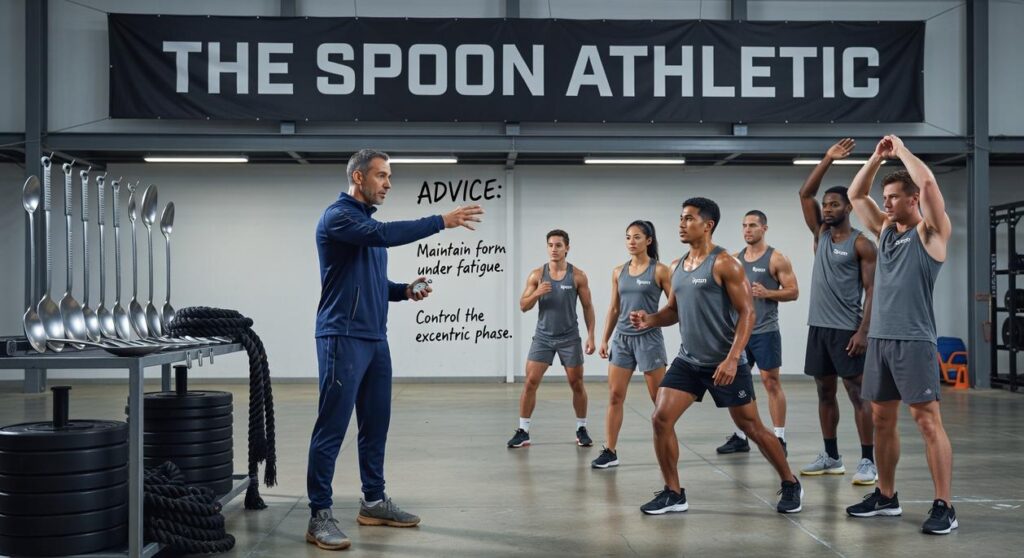
You’re training hard but not seeing the results you want.
I’ve been there. You show up, you put in the work, but something’s missing. Maybe you’ve hit a wall with your performance. Or you’re dealing with nagging injuries that won’t go away.
The problem isn’t your effort. It’s your structure.
Most people train without a real system. They mix random workouts, skip recovery, and wonder why their body breaks down or stops improving.
Here’s what I know from working with athletes at every level: the difference between someone who plateaus and someone who keeps getting better comes down to strategy.
This guide gives you a complete framework for athletic training. The same principles professionals use to build strength, endurance, and resilience.
We base everything at thespoonathletic on sports science and real results from competitive environments. Not trends. Not guesswork.
You’ll learn how to structure your training so every piece works together. Strength, endurance, nutrition, recovery. All of it.
This isn’t about working harder. It’s about working smarter so your body can actually do what you’re asking it to do.
The Foundation: Core Principles of Athletic Training
You can’t skip the basics.
I see athletes all the time who jump straight into fancy programs without understanding what actually makes training work. They wonder why they’re not getting stronger or faster.
The truth is simpler than you think.
Progressive Overload: The Engine of Improvement
Your body adapts to stress. That’s it. If you keep doing the same thing, you’ll stay the same.
Progressive overload means you gradually increase what you’re asking your body to do. More weight. More reps. Less rest between sets.
For strength, this looks like adding 5 pounds to your squat each week. For endurance, maybe you cut your rest intervals from 90 seconds to 60 seconds while keeping the same pace.
The key word is gradually. (Jumping too fast is how you get hurt.)
Specificity: Training for Your Goal
Here’s where most programs get it wrong.
They treat all athletes the same. But a sprinter and a marathoner need completely different things from their bodies.
This is the SAID principle. Specific Adaptation to Imposed Demands. Your body gets better at exactly what you make it do.
If you’re training for explosive power, you need short bursts of maximum effort. If you’re building endurance, you need sustained moderate intensity work.
You can’t do both at once and expect great results in either.
Consistency and Periodization: The Blueprint for Long-Term Success
One killer workout won’t change you.
Showing up three times a week for six months will.
But here’s what most people miss about consistency. It’s not just about doing the work. It’s about structuring that work so you don’t burn out.
That’s where periodization comes in. You break your training into cycles. Macrocycles (months), mesocycles (weeks), and microcycles (days).
Some weeks you push hard. Others you pull back and recover. This prevents overtraining and sets you up to peak when it matters.
At Thespoonathletic, we see athletes transform when they finally understand these three principles work together. Not separately.
Essential Training Techniques and Modalities
You can’t build an athlete on cardio alone.
I see it all the time. People running themselves into the ground thinking more miles equals better performance. Or they’re doing endless HIIT sessions because someone on social media said it’s the fastest way to get fit. In a world where fitness trends often prioritize quantity over quality, it’s refreshing to see the balanced approach of Thespoonathletic, which emphasizes sustainable training methods over the relentless pursuit of endless miles or high-intensity workouts. In a world where fitness trends often prioritize quantity over quality, it’s refreshing to find communities like Thespoonathletic that emphasize the importance of smart training and holistic well-being over mere mileage or high-intensity workouts.
Here’s my take. That approach burns you out faster than it builds you up.
Real athletic development needs structure. You need strength that holds up under pressure. You need an engine that doesn’t quit. And you need joints that can actually move the way they’re supposed to.
Some coaches will tell you to pick one thing and go all in. Specialize early. Focus only on your sport-specific work.
I disagree.
Unless you’re already at an elite level, you need a foundation first. And that foundation comes from understanding how different training modalities work together.
Strength and Power Development: Build the Chassis
This is where everything starts.
I’m talking about compound movements. Squats, deadlifts, overhead presses. The stuff that makes you work as a complete unit instead of isolating tiny muscles.
These movements teach your body to produce force. Real force that translates to the field or court.
But strength alone isn’t enough. You also need to express that strength quickly. That’s where plyometrics come in. Box jumps and medicine ball throws teach you to convert raw strength into explosive power.
Think of it this way. Strength is your potential. Power is what you actually do with it.
Endurance and Cardiovascular Conditioning: Develop the Engine
Now we get to the part most people screw up.
There are two types of conditioning work. Aerobic training (that steady Zone 2 stuff) and anaerobic training (sprints and HIIT). They’re not interchangeable.
Your aerobic base is what allows you to recover between hard efforts. It’s what keeps you fresh in the fourth quarter. Most athletes skip this because it feels too easy or too boring.
Big mistake.
I’ve watched too many people jump straight into high-intensity work without building that base first. They get fast for about six weeks, then they plateau or get hurt.
The fitness guide thespoonathletic approach prioritizes building that aerobic foundation before layering in the hard stuff. It’s not sexy but it works.
Mobility and Flexibility: Protect Your Investment
Here’s something most people get wrong.
Mobility and flexibility aren’t the same thing. Mobility is your active range of motion. It’s what you can control. Flexibility is passive. It’s how far someone else can push you.
You need both, but mobility matters more for performance.
Before you train, use dynamic stretching. Get your joints moving through their full range while staying active. After you train, that’s when static stretching makes sense. You’re cooling down and working on flexibility.
This isn’t optional. Your body is an investment. If you can’t move properly, everything else falls apart.
Fueling Performance: A Non-Negotiable Nutritional Blueprint

You can train hard six days a week and still feel like garbage.
I see it all the time. Athletes who nail their workouts but completely ignore what they’re putting in their bodies. Then they wonder why their performance plateaus or why they’re always tired.
Here’s what most people get wrong about sports nutrition.
They think it’s complicated. That you need to calculate every macro down to the gram or follow some restrictive meal plan that takes the joy out of eating.
But after years of working with athletes at different levels, I’ve learned something simple. The basics work. You just have to actually do them.
Macronutrients for Athletes: The Building Blocks
Let’s start with what your body actually needs.
Protein rebuilds your muscles after you break them down in training. Think of it as your repair crew. You need about 0.7 to 1 gram per pound of body weight if you’re training seriously.
Carbohydrates are your primary fuel source. Not optional. Not something to fear. When you’re pushing through a tough workout, your muscles run on glycogen (which comes from carbs). Cut them too low and your performance tanks.
Fats keep your hormones working right and fuel lower intensity work. They also help you absorb certain vitamins. You need them, just not as much as protein and carbs.
Some trainers will tell you to go low-carb or high-fat or whatever the trend is this month. And sure, those approaches work for some people in specific situations.
But here’s my counterpoint.
Most athletes perform better with adequate carbs. I watched this play out back in 2018 when low-carb diets were everywhere. The athletes who stuck with them for endurance training? They struggled. Their times got slower and they felt awful during high-intensity work. In light of my observations from 2018 regarding the detrimental effects of low-carb diets on athletic performance, today’s Fitness Tip of the Day Thespoonathletic emphasizes the importance of incorporating adequate carbohydrates for optimal endurance and high-intensity training. In light of my observations from 2018, it’s clear that athletes should prioritize carbohydrates for endurance, and as a helpful reminder, today’s Fitness Tip of the Day Thespoonathletic emphasizes the importance of fueling your body properly to optimize performance.
Your body is pretty straightforward about what it needs to perform.
Nutrient Timing for Optimal Results
When you eat matters almost as much as what you eat.
I tested this myself over three months of training. On days when I ate a solid meal two to three hours before training, my sessions were noticeably better. More energy, better focus, stronger lifts.
Skip that pre-training meal? Everything felt harder.
Your body needs fuel before you ask it to perform. A mix of carbs and some protein about two to three hours out works for most people. (Some athletes do better with a smaller snack 30 to 60 minutes before, but that’s individual.)
The post-training window is just as important.
After you finish training, your muscles are primed to absorb nutrients. This is when muscle protein synthesis kicks into high gear. Get protein and carbs in within an hour or two after your session.
This isn’t bro science. Research from the Journal of the International Society of Sports Nutrition backs this up. What you eat around your workouts directly impacts how well you recover and adapt.
You can find more practical guidance in our fitness tip of the day thespoonathletic section.
Hydration: The Overlooked Performance Enhancer
Most athletes are walking around slightly dehydrated and don’t even know it.
Even 2% dehydration can mess with your strength, endurance, and mental sharpness. That’s not much. For a 150-pound athlete, that’s losing just three pounds of water weight.
I learned this the hard way during a competition in summer 2020. I thought I was drinking enough. I wasn’t. My performance dropped off a cliff in the later rounds and I couldn’t figure out why until afterward.
Here’s the simple fix.
Drink water consistently throughout the day. Not just during training. Your urine should be light yellow (not clear, not dark). That’s your easiest indicator.
During training, aim for about 7 to 10 ounces every 10 to 20 minutes depending on intensity and heat. After training, drink about 16 to 24 ounces for every pound you lost through sweat.
Pro tip: Weigh yourself before and after hard training sessions for a week. The difference tells you exactly how much fluid you’re losing and need to replace.
Some people say hydration is overrated. That your body will just tell you when you’re thirsty. I walk through this step by step in Advice Guide Thespoonathletic.
But thirst is a late indicator. By the time you feel thirsty, you’re already behind. And in competition or intense training, that delay costs you.
Your nutrition doesn’t have to be perfect. But it does need to be consistent and based on what actually works.
Mastering Recovery: Where the Real Gains Are Made
You can crush every workout on your schedule and still make zero progress.
Why? Because you’re skipping the part where your body actually gets stronger.
Recovery isn’t what happens when you’re not training. It’s when the training pays off.
Sleep: Your Body’s Repair Shop
I’m not going to tell you to get eight hours and call it a day. You already know sleep matters.
What you might not know is what’s happening while you’re out.
Your body releases growth hormone during deep sleep. This is when muscle tissue repairs itself from the damage you caused in the gym (and yes, that soreness is actual damage). According to research published in the Journal of Applied Physiology, growth hormone secretion can drop by up to 70% when you’re sleep deprived.
Cortisol, your stress hormone, also resets during quality sleep. Skip it and cortisol stays high, which breaks down muscle tissue and stores fat.
Sleep isn’t downtime. It’s when your body does the work.
Active Recovery That Actually Works
Rest days don’t mean sitting on the couch all day.
Light movement helps. A 20-minute walk or easy bike ride increases blood flow to sore muscles without adding training stress. Foam rolling works the same way, breaking up tension and moving fluid through tissues.
The key word here is light. If you’re breathing hard, you’re doing too much.
When Your Body Waves the White Flag
Here’s what most people at thespoonathletic see: athletes who ignore the warning signs until they’re forced to stop.
Persistent fatigue that coffee can’t fix. Performance dropping even though you’re trying harder. Mood swings or feeling irritable for no reason.
Those aren’t character flaws. They’re your body telling you to back off.
Schedule deload weeks every 4-6 weeks. Cut volume by 40-50% and let your system catch up. To optimize your gaming performance and overall well-being, consider incorporating deload weeks into your routine as outlined in the Fitness Guide Thespoonathletic, where cutting volume by 40-50% every 4-6 weeks allows your body to recover and adapt effectively. To enhance your gaming performance and ensure you remain at the top of your game, integrating deload weeks into your routine, as recommended in the Fitness Guide Thespoonathletic, can significantly aid in recovery by reducing your training volume by 40-50% every 4-6 weeks.
Recovery is where you get better. Training just creates the opportunity.
Building Your Athletic System
You now have a complete guide to the techniques that actually work.
I’ve shown you what it takes to build a real athletic training system. Not just random workouts but a strategy that fits together.
Here’s the truth: simply going to the gym isn’t enough. Training without an integrated plan for nutrition and recovery is a recipe for stagnation. You’ll spin your wheels and wonder why nothing changes.
The solution is right in front of you. Apply progressive overload. Train with specificity. Fuel your body right and recover like you mean it.
These principles break through plateaus. They deliver consistent results over the long haul.
Now it’s time to act.
Choose one area from this guide. Maybe it’s nutrition timing or active recovery. Pick something that speaks to your biggest gap right now.
Commit to implementing it this week.
thespoonathletic has given you the roadmap. Your job is to take the first step and start training like a true athlete.
 Founder & Chief Performance Strategist
Ask Tylisia Mornelle how they got into pro insights and you'll probably get a longer answer than you expected. The short version: Tylisia started doing it, got genuinely hooked, and at some point realized they had accumulated enough hard-won knowledge that it would be a waste not to share it. So they started writing.
What makes Tylisia worth reading is that they skips the obvious stuff. Nobody needs another surface-level take on Pro Insights, Fitness Nutrition Planning, Athletic Health Fundamentals. What readers actually want is the nuance — the part that only becomes clear after you've made a few mistakes and figured out why. That's the territory Tylisia operates in. The writing is direct, occasionally blunt, and always built around what's actually true rather than what sounds good in an article. They has little patience for filler, which means they's pieces tend to be denser with real information than the average post on the same subject.
Tylisia doesn't write to impress anyone. They writes because they has things to say that they genuinely thinks people should hear. That motivation — basic as it sounds — produces something noticeably different from content written for clicks or word count. Readers pick up on it. The comments on Tylisia's work tend to reflect that.
Founder & Chief Performance Strategist
Ask Tylisia Mornelle how they got into pro insights and you'll probably get a longer answer than you expected. The short version: Tylisia started doing it, got genuinely hooked, and at some point realized they had accumulated enough hard-won knowledge that it would be a waste not to share it. So they started writing.
What makes Tylisia worth reading is that they skips the obvious stuff. Nobody needs another surface-level take on Pro Insights, Fitness Nutrition Planning, Athletic Health Fundamentals. What readers actually want is the nuance — the part that only becomes clear after you've made a few mistakes and figured out why. That's the territory Tylisia operates in. The writing is direct, occasionally blunt, and always built around what's actually true rather than what sounds good in an article. They has little patience for filler, which means they's pieces tend to be denser with real information than the average post on the same subject.
Tylisia doesn't write to impress anyone. They writes because they has things to say that they genuinely thinks people should hear. That motivation — basic as it sounds — produces something noticeably different from content written for clicks or word count. Readers pick up on it. The comments on Tylisia's work tend to reflect that.