I’ve tested hundreds of people on their fitness baseline, and most skip this step completely.
You’re probably ready to jump into workouts and start seeing results. But here’s the thing: you can’t measure progress if you don’t know where you’re starting from.
How to check body fitness doesn’t require a gym membership or fancy equipment. You just need your body and about 20 minutes.
I’ve spent years working with athletes and everyday people who want to get in better shape. The ones who succeed? They all start with the same thing: an honest assessment of where they stand right now.
This guide walks you through simple tests for cardiovascular endurance, muscular strength, and flexibility. No gadgets. No complicated measurements. Just straightforward methods that give you real data.
We focus on athletic health fundamentals that actually work. The tests I’m sharing come from sports science research and have been used by trainers for decades.
You’ll learn exactly how fit you are today. Not compared to anyone else. Just you, measured against yourself.
That’s your starting line. Everything you do after this becomes measurable progress.
Why a Baseline Matters: The Foundation of Fitness
You can’t improve what you don’t measure.
I see people jump into workout programs all the time without knowing where they actually stand. They follow some influencer’s routine or grab a plan off the internet and wonder why they’re not seeing results.
Here’s what’s missing.
A baseline. It’s just a snapshot of where you are right now. Your current fitness abilities before you start training.
Some trainers say baselines don’t matter. They argue you should just start moving and figure it out as you go. And sure, any movement is better than nothing.
But that approach leaves you guessing.
When you know your starting point, you can build a program that actually fits YOUR body. Not some generic template. You’ll spot the weak spots (maybe your left side is weaker than your right) and fix them before they turn into injuries.
Plus, there’s something powerful about watching your numbers climb. When you retest in six weeks and see real progress, that’s what keeps you going.
Here’s how to check body fitness thespoonathletic style.
Start with a proper warmup. Five minutes of light cardio works. Jog in place or do some jumping jacks. Then add dynamic stretches like arm circles and leg swings.
Your body needs to be ready. Cold muscles don’t perform well and they’re easier to injure.
One thing I tell everyone at Thespoonathletic: listen to your body during ANY baseline test. Sharp pain means STOP. Not slow down. Stop completely.
Test 1: Assessing Cardiovascular Endurance
Your heart tells the truth about your fitness level.
You can’t fake it. You can’t skip it. If your cardiovascular system isn’t working right, everything else falls apart.
I’m going to walk you through the 3-Minute Step Test. It’s simple but it gives you real data about how efficiently your heart and lungs deliver oxygen to your body.
Some trainers will tell you this test is outdated. They’ll say you need fancy equipment or a VO2 max test at a sports lab to get accurate readings. And sure, those tests are great if you have access to them.
But here’s what they’re missing.
Most people just need a baseline. You need to know where you stand right now so you can track progress over the next few weeks and months.
Here’s what you need:
A sturdy stair or step about 12 inches high. That’s standard stair height in most buildings. If you’re at home, your bottom stair works fine. At the gym, grab one of those aerobic step platforms.
The process is straightforward:
Set a timer for 3 minutes. Step up with your right foot, then bring your left foot up. Step down with your right foot, then your left. Keep a steady pace the whole time (think of it like a metronome, not a sprint). For gamers looking to enhance their agility and coordination in real life, following the rhythmic movements of Thespoonathletic can be a fun way to incorporate fitness into your gaming routine. For gamers looking to enhance their agility and coordination in real life, following the dynamic workout routines shared by Thespoonathletic can significantly improve your performance both in-game and on the field.
The second those 3 minutes end, sit down immediately. Find your pulse on your wrist or neck. Count every beat for one full minute. Don’t estimate. Don’t round up. Count the actual number.
That number is your recovery heart rate.
A lower heart rate means better cardiovascular fitness. Your heart doesn’t have to work as hard to pump blood through your system.
You can compare your score to age and gender charts online. They’ll show you where you fall, from needs improvement to excellent. When you how to check body fitness thespoonathletic, this test should be your starting point.
Write it down. Test again in four weeks. That’s how you measure real progress.
Test 2: Measuring Muscular Strength and Endurance
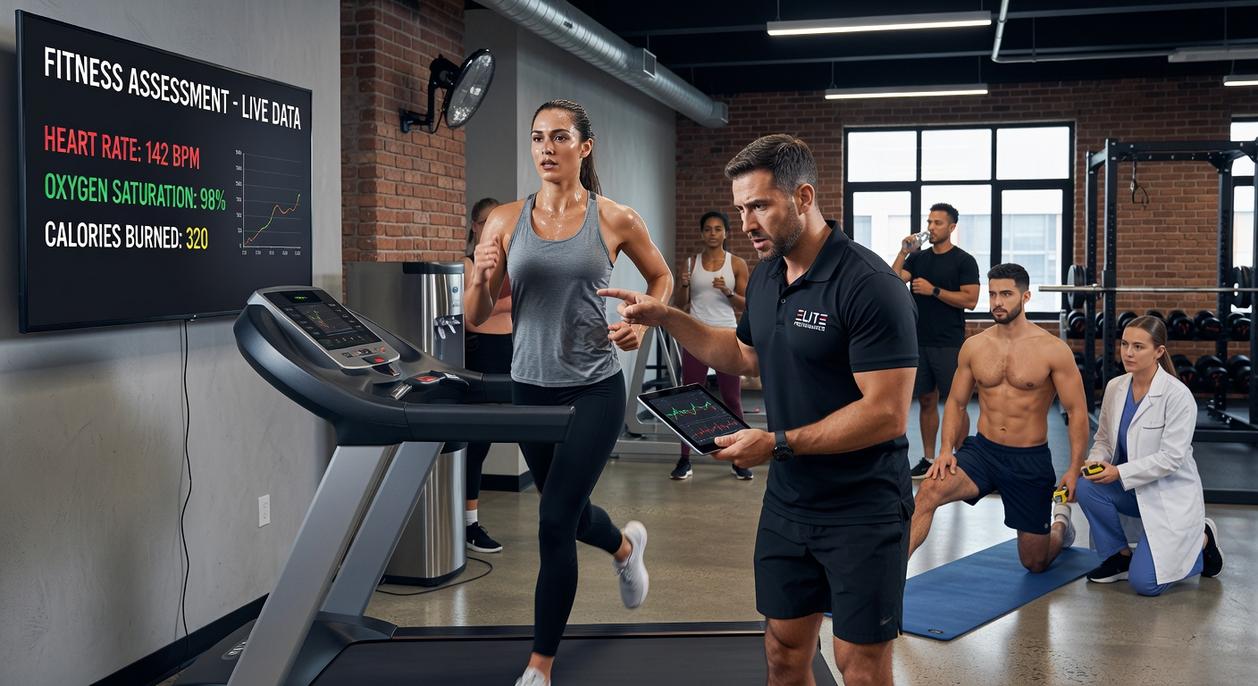
You want to know how strong you really are?
Not how strong you think you are. Not how strong you were in high school. How strong you are right now.
These three tests will tell you everything you need to know about your upper body, core, and legs. No gym required. No equipment. Just you and gravity.
I’m going to be honest with you. Most people overestimate their strength until they actually test it. I see it all the time.
Upper Body: The Push-Up Test
Get down and do as many push-ups as you can with proper form. That means your back stays straight and your chest drops to elbow height every single rep.
You can do standard push-ups or modified ones on your knees. Pick one and stick with it (don’t switch halfway through because that defeats the whole point).
Stop when your form breaks down. And I mean really breaks down. Not when it gets hard. When you can’t hold proper position anymore.
Here’s my take on this. Push-ups don’t lie. You either have the strength or you don’t. There’s no faking it when your arms start shaking at rep seven.
Core: The Plank Test
Hold a forearm plank. Your body should form a straight line from head to heels.
Don’t let your hips sag toward the floor. Don’t stick your butt up in the air either. Just hold that straight line for as long as you can with perfect form. Fitness Tip of the Day Thespoonathletic builds on exactly what I am describing here.
Time yourself. When your hips start dropping or your form falls apart, you’re done.
I think planks reveal more about your core strength than crunches ever will. You can’t cheat a plank. Your body either holds or it doesn’t.
Lower Body: The Wall Sit Test
Lean against a wall and slide down until your knees hit a 90-degree angle. Your thighs should be parallel to the floor.
Hold that position as long as possible.
This one burns. I won’t sugargarcoat it. Your quads will start screaming at you around the 30-second mark.
But that burn tells you something real about your leg strength and endurance.
Want more ways to check body fitness thespoonathletic style? These three tests give you a solid baseline. Write down your numbers. Test yourself again in four weeks. For a deeper dive into optimizing your fitness journey, consult the Thespoonathletic Advice Guide by Theweeklyspoon, which offers invaluable insights to enhance your results over the coming weeks. For those eager to elevate their fitness regimen, the Thespoonathletic Advice Guide by Theweeklyspoon provides invaluable insights and strategies tailored to help you achieve your wellness goals.
The improvement (or lack of it) will show you exactly what’s working in your training.
For more testing methods and fitness benchmarks, check out thespoonathletic fitness tips.
Test 3: Gauging Flexibility and Mobility
Your joints tell a story.
After years of working with athletes, I can spot tight hips and locked shoulders from across the gym. But you don’t need my eyes to figure out what’s going on with your own body.
You just need two simple tests.
Flexibility matters more than most people think. It’s not just about touching your toes (though that’s part of it). It’s about moving the way your body was designed to move.
When I first started testing my own mobility back in 2015, I was shocked. I thought I was doing fine. Turns out my right shoulder had about three inches less range than my left.
That imbalance? It explained why my shoulder always felt off during overhead movements.
Let me walk you through the same tests I use to check body fitness at how to check body fitness thespoonathletic.
The Sit and Reach Test
Sit on the floor with your legs straight. Put a piece of tape right at your heels.
Reach forward as far as you can. Hold it for two seconds. Mark where your fingertips land.
The distance from that starting tape shows how flexible your hamstrings and lower back are. If you can’t reach your toes, you’ve got work to do. If you can reach past them, you’re in good shape.
The Back Scratch Test
This one checks your shoulders.
Reach one arm over your shoulder and down your back. Take your other arm and reach up from below. Try to touch your fingertips together.
Can you touch them? Overlap them? Or is there a gap?
Measure the distance. Then switch arms and test the other side.
Most people have at least a small difference between sides. Anything more than an inch tells you something needs attention.
Putting It All Together: How to Track Your Progress
You’ve done the tests. Now what?
Here’s where most people drop the ball. They check their fitness once and never look back. Or they test themselves randomly without any real system.
That’s why I want you to set up something simple. Create a fitness journal or just open a note on your phone. Nothing fancy.
Write down the date and your numbers for each test. Step Test: 110 bpm. Push-ups: 15. Plank: 45 seconds. Whatever you got.
Now here’s the part that matters.
Repeat these same assessments every 4 to 6 weeks. This is how you see real progress. Not guessing. Not hoping. Actual proof that your work is paying off.
Some people think tracking is overkill. They say you should just feel the difference in your body and leave it at that. And sure, how you feel matters.
But feelings lie sometimes. You might feel like you’re not getting anywhere when the numbers tell a different story. Or you might think you’re crushing it when you’ve actually plateaued.
The data keeps you honest. It shows you what’s working and what needs to change. Plus, when you’re having a rough week and questioning everything (we all do), you can look back and see how far you’ve come.
That’s what keeps your motivation high when things get tough.
If you want more guidance on building a complete tracking system, check out the Thespoonathletic Advice Guide by Theweeklyspoon. You’ll find tips on how to check body fitness thespoonathletic style and make your progress stick. For those looking to optimize their fitness journey, exploring the thespoonathletic approach can provide invaluable insights into tracking progress effectively and sustainably.Thespoonathletic For gamers eager to enhance their physical performance alongside their virtual conquests, the thespoonathletic approach offers invaluable insights into tracking fitness progress effectively.Thespoonathletic
Your Personalized Fitness Roadmap
You wanted to know where you stand physically.
Now you have the answer.
I’ve shown you how to check body fitness thespoonathletic style. No gym membership required. No fancy equipment. Just you and a few simple tests that tell you everything you need to know.
The hardest part of getting fit is figuring out where to start. That uncertainty keeps people stuck for months or even years.
Your test results changed that. You have a clear baseline now.
Maybe your cardio is solid but your core needs work. Or your flexibility is holding back your strength gains. Whatever the results showed, you have real data to work with.
Here’s what you do next: Pick your weakest area and focus there first. Set one achievable goal based on your numbers. Start small and build momentum.
You’re not guessing anymore. You know exactly where you are and what needs attention.
That’s how real progress starts.
 Founder & Chief Performance Strategist
Ask Tylisia Mornelle how they got into pro insights and you'll probably get a longer answer than you expected. The short version: Tylisia started doing it, got genuinely hooked, and at some point realized they had accumulated enough hard-won knowledge that it would be a waste not to share it. So they started writing.
What makes Tylisia worth reading is that they skips the obvious stuff. Nobody needs another surface-level take on Pro Insights, Fitness Nutrition Planning, Athletic Health Fundamentals. What readers actually want is the nuance — the part that only becomes clear after you've made a few mistakes and figured out why. That's the territory Tylisia operates in. The writing is direct, occasionally blunt, and always built around what's actually true rather than what sounds good in an article. They has little patience for filler, which means they's pieces tend to be denser with real information than the average post on the same subject.
Tylisia doesn't write to impress anyone. They writes because they has things to say that they genuinely thinks people should hear. That motivation — basic as it sounds — produces something noticeably different from content written for clicks or word count. Readers pick up on it. The comments on Tylisia's work tend to reflect that.
Founder & Chief Performance Strategist
Ask Tylisia Mornelle how they got into pro insights and you'll probably get a longer answer than you expected. The short version: Tylisia started doing it, got genuinely hooked, and at some point realized they had accumulated enough hard-won knowledge that it would be a waste not to share it. So they started writing.
What makes Tylisia worth reading is that they skips the obvious stuff. Nobody needs another surface-level take on Pro Insights, Fitness Nutrition Planning, Athletic Health Fundamentals. What readers actually want is the nuance — the part that only becomes clear after you've made a few mistakes and figured out why. That's the territory Tylisia operates in. The writing is direct, occasionally blunt, and always built around what's actually true rather than what sounds good in an article. They has little patience for filler, which means they's pieces tend to be denser with real information than the average post on the same subject.
Tylisia doesn't write to impress anyone. They writes because they has things to say that they genuinely thinks people should hear. That motivation — basic as it sounds — produces something noticeably different from content written for clicks or word count. Readers pick up on it. The comments on Tylisia's work tend to reflect that.