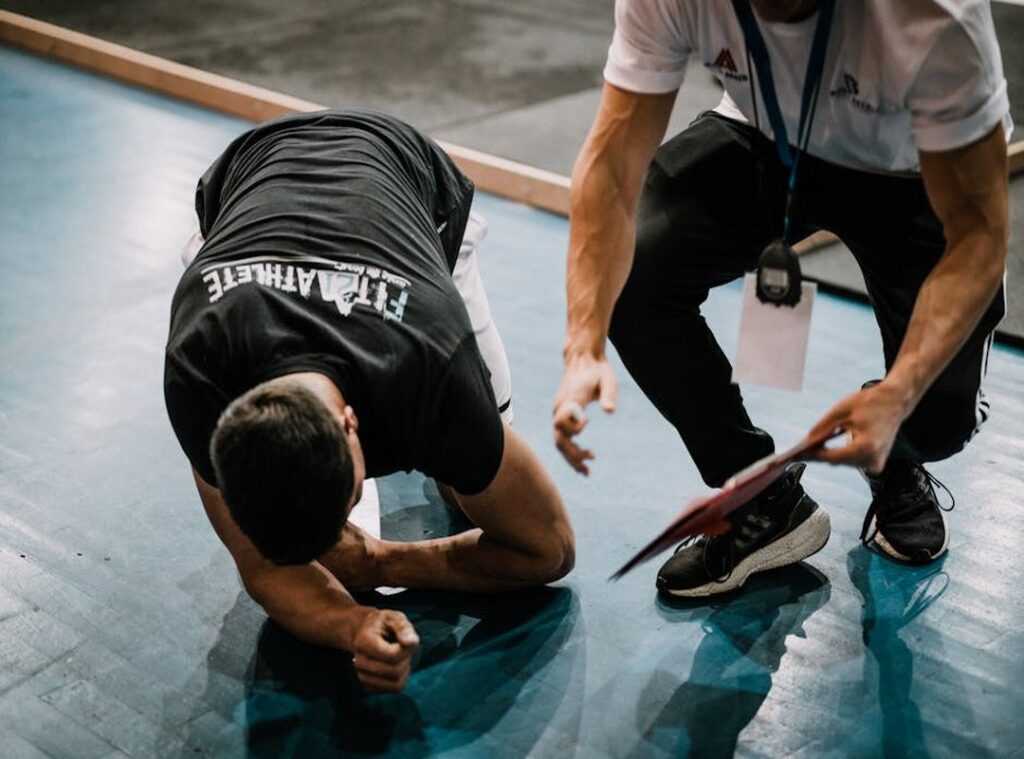
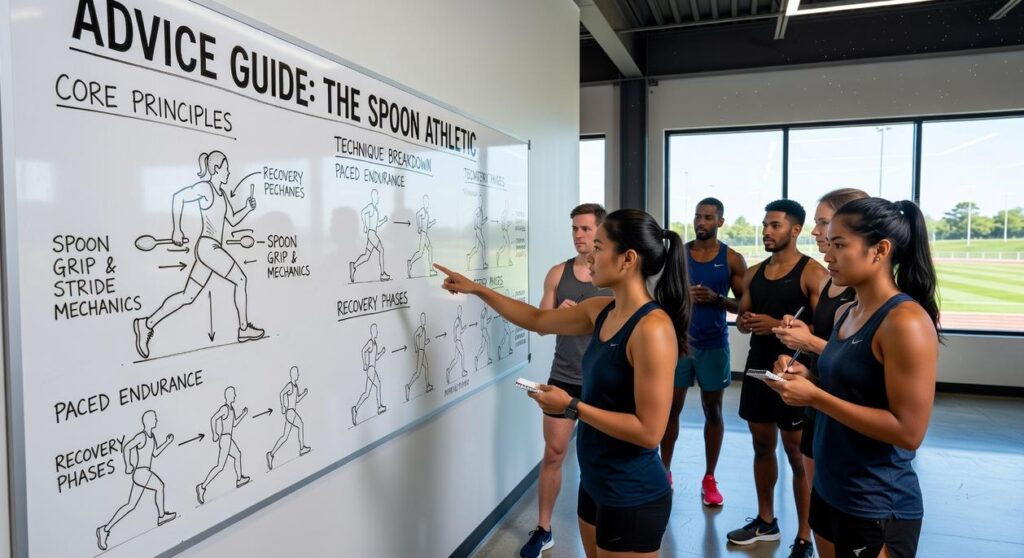
I’ve seen too many people grind themselves into the ground because they think working out harder is the answer.
You’re probably stuck right now. You train hard but you’re not seeing the results you want. Or worse, you’re dealing with nagging injuries that won’t go away.
Here’s the truth: exercising and training like an athlete are two completely different things.
Most people focus everything on the workout itself. They ignore the other parts that actually make the difference between staying stuck and breaking through.
I’m going to show you the four areas that separate real athletes from people who just work out a lot. This isn’t complicated, but most people get it wrong.
The Spoon Athletic builds this content on established sports science and the habits that professional athletes and elite coaches actually use. Not trends. Not quick fixes. What works.
You’ll learn how to think like an athlete, fuel your body the right way, train with real purpose, and recover so you can actually improve instead of just breaking yourself down.
This is your blueprint for making that shift. From just exercising to training like you mean it.
Pillar 1: Building the Athletic Mindset and Foundation
You want to know the truth about getting stronger?
It’s not about destroying yourself in the gym three times a week.
I see people do this all the time. They go hard for a month, burn out, then disappear. Six months later they’re back at square one.
Here’s what actually works.
Consistency beats intensity every single time. Showing up four days a week at 80% effort will get you further than going all out once in a while. Your body adapts to regular stress, not random heroics.
But consistency without direction? That’s just spinning your wheels.
That’s where goal setting comes in. I know SMART goals sound like corporate training material (because they kind of are), but they work. Specific, Measurable, Achievable, Relevant, Time-bound. Write down exactly what you want and when you want it.
Not “get stronger.” That’s useless.
Try “add 20 pounds to my squat in 12 weeks.” Now you’ve got something to work toward.
Once you’re in the gym, focus matters more than most people think. The mind-muscle connection isn’t some mystical concept. It’s about paying attention to what you’re doing instead of just moving weight around.
Feel the muscle working. Control the movement. That’s how you get real activation and stay injury-free.
Now here’s something I’m still figuring out myself.
Discipline. Some days I nail my nutrition and sleep. Other days? Not so much. What I’ve learned is that discipline isn’t something you either have or don’t have. It’s more like a skill you practice.
You build it the same way you build muscle at Thespoonathletic. Small reps, done regularly, over time.
Pillar 2: Fueling for Peak Performance—A Practical Nutrition Guide
I used to think I could out-train a bad diet.
Spoiler alert: I couldn’t.
I’d crush workouts but feel like garbage by hour two. My recovery took forever and I kept hitting walls I couldn’t explain. Turns out, I was eating like someone who sat at a desk all day, not someone training hard. Realizing that my nutrition habits were misaligned with my training intensity was a game changer, as I discovered a wealth of information on fueling my workouts through communities like Thespoonathletic. In my quest for peak performance, I discovered that embracing the philosophy of Thespoonathletic helped me align my nutrition with my rigorous training, transforming my recovery and breaking through those frustrating walls.
Here’s what I learned the hard way. Your body needs the right fuel at the right time. Not complicated meal plans or expensive supplements. Just the basics done right.
The Big 3: Macronutrients That Actually Matter
Let me break down what your body runs on.
Carbohydrates are your primary energy source. Think of complex carbs like oatmeal and sweet potatoes as your steady burn fuel. They keep you going during long training sessions. Simple carbs like fruit or white rice? Those are for quick energy when you need it fast (like right before a workout).
Protein builds and repairs muscle tissue. I aim for about 0.7 to 1 gram per pound of body weight daily. So if you weigh 150 pounds, you’re looking at roughly 105 to 150 grams of protein spread throughout the day.
Fats support hormone production and help with endurance. I stick with sources like avocados, nuts, and olive oil. Your body needs these to function properly.
Water Isn’t Optional
Here’s something that surprised me. Just 2% dehydration can tank your performance by up to 10% (according to research from the American College of Sports Medicine).
I aim for half my body weight in ounces daily. That means if you’re 160 pounds, you need about 80 ounces of water. More if you’re sweating heavily during training.
When You Eat Matters Too
I used to skip pre-workout meals because I thought training fasted would help me lose weight faster. Wrong move. I had no energy and my workouts suffered.
Now I eat a carb-focused meal about 2 to 3 hours before training. Post-workout, I get protein and carbs within an hour to help with recovery and muscle repair.
The Advice Thespoonathletic provides boost termanchor comes from real experience, not theory.
You don’t need perfect nutrition. You just need consistent, smart choices that support what you’re asking your body to do.
Pillar 3: Train Smarter, Not Harder—Core Training Principles
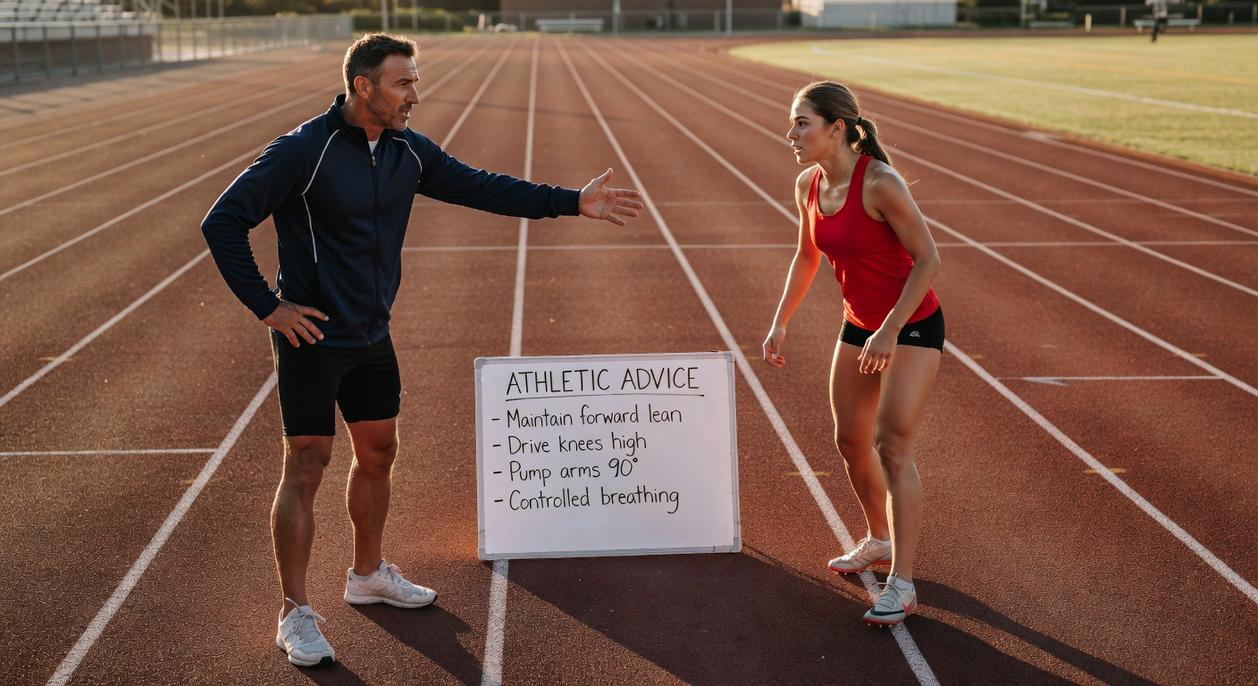
You can’t just show up and wing it.
I see athletes do this all the time. They hit the gym without a plan, throw some weights around, and wonder why they’re not getting stronger. Or they run the same three miles at the same pace every single day and can’t figure out why their race times plateau.
Here’s what I think matters most.
Progressive overload.
Your body adapts to stress. If you keep doing the same workout with the same weight or the same pace, your body stops changing. You need to gradually increase the demands. More weight, more reps, longer distances, faster intervals. Something has to progress or you’re just spinning your wheels.
But here’s where people mess up. They think harder always means better.
It doesn’t.
I’d rather see you squat with proper form three times a week than destroy yourself with daily max-effort sessions that leave you too sore to function. That’s not training. That’s just punishment.
When it comes to building a solid foundation, you need both strength and endurance. They work together (even if some gym bros will tell you cardio kills gains). Strength training gives you power and resilience. Cardiovascular fitness keeps your engine running when things get tough.
For strength work, I focus on compound movements. Squats, deadlifts, presses, rows. These build functional power across your entire body. Not just isolated muscles that look good in a mirror.
On the endurance side, you’ve got two main approaches. Aerobic training is your steady-state work. Long runs, bike rides, swims at a sustainable pace. This builds your base. Anaerobic training is your high-intensity interval work. Short bursts that push you into oxygen debt. Both have their place, and the thespoonathletic advice guide by theweeklyspoon covers when to use each. Incorporating both aerobic and anaerobic training into your regimen is essential for optimal performance, and the invaluable “Advice Thespoonathletic Provides Boost Termanchor” can guide you in balancing these approaches effectively. Incorporating both aerobic and anaerobic training into your routine is essential for endurance athletes, and as “Advice Thespoonathletic Provides Boost Termanchor,” understanding how to balance these approaches can significantly enhance your overall performance.
Now here’s something that gets overlooked.
Specificity matters.
A marathoner and a powerlifter shouldn’t train the same way. Your training needs to match what you’re actually trying to do. If you’re preparing for a sport with explosive movements, you need explosive training. If you’re building endurance for long events, you need volume.
One more thing before we move on. Thespoonathletic Fitness Tips builds on the same ideas we are discussing here.
Periodization. This is just a fancy word for training in cycles. You can’t go hard all the time without burning out. Plan phases where you build volume, phases where you peak for performance, and phases where you back off to recover. Your body needs that rhythm to keep adapting without breaking down.
Pillar 4: Mastering Recovery—Where Real Growth Happens
Sleep: The Ultimate Performance Enhancer
You want to know the fastest way to kill your gains?
Skip sleep.
I’m talking about real sleep. Seven to nine hours of it. Not five hours with three cups of coffee to make up the difference.
Here’s what happens when you actually sleep enough. Your body releases growth hormone (which peaks during deep sleep stages). Your muscles repair the damage from training. Your brain clears out metabolic waste and consolidates what you learned during practice.
Without it? Your testosterone drops. Your cortisol stays high. Your reaction time slows down.
Sleep isn’t just recovery. It’s when the work you did actually becomes strength.
Active Recovery Explained
Some athletes think rest days mean sitting on the couch all day.
That’s not recovery. That’s just being sedentary.
Active recovery means moving at low intensity on your off days. I’m talking about a 20-minute walk. Some light stretching. Maybe 10 minutes with a foam roller on tight spots.
This kind of movement increases blood flow to sore muscles without adding stress. It helps clear out metabolic byproducts faster than complete rest. You’ll feel less stiff and move better when you get back to hard training.
Listen to Your Body
Your body will tell you when something’s wrong.
The question is whether you’re paying attention.
Persistent fatigue that doesn’t go away after a rest day? That’s a sign. Performance dropping even though you’re training harder? Another one. Feeling irritable or losing motivation for workouts you used to love? Your body’s waving a red flag.
These are early warnings of overtraining. When you see them, take an unscheduled rest day. I know it feels like you’re falling behind. But pushing through when your body needs recovery? That’s how you end up injured or burned out. In moments when your body signals the need for recovery, remember the invaluable insights offered in the Thespoonathletic Advice Guide by Theweeklyspoon, which emphasize that taking an unscheduled rest day is crucial to preventing injury and burnout. In moments when your body signals the need for recovery, remember the invaluable insights from the Thespoonathletic Advice Guide by Theweeklyspoon, which emphasizes that taking an unscheduled rest day can be crucial to preventing injury and burnout.
The best athletes I know treat recovery like training. They take it seriously because they understand that growth doesn’t happen in the gym. It happens after.
For more on building a complete training approach, check out this advice guide thespoonathletic resource.
Integrating the Pillars for Sustainable Success
You’ve seen how real athletic development works now.
It’s not about one thing. It’s about mindset, nutrition, training, and recovery working together.
I know you’ve been pushing hard in the gym. But if that’s all you’re doing, you’re leaving results on the table. It’s inefficient and it burns you out.
When you bring these four pillars together, something clicks. They feed off each other. Your training gets better because you’re recovering right. Your recovery improves because your nutrition is dialed in. Your mindset keeps you consistent when motivation fades.
That’s how you build something that lasts.
Here’s what I want you to do: Pick one thing from thespoonathletic guide. Maybe it’s getting seven hours of sleep instead of five. Maybe it’s finally tracking your protein intake. Maybe it’s planning your workouts instead of winging it.
Just one thing.
Commit to it this week. Not next month. This week.
Small changes compound. That’s how you go from working hard to working smart.
You have the framework now. Time to use it.
 Founder & Chief Performance Strategist
Ask Tylisia Mornelle how they got into pro insights and you'll probably get a longer answer than you expected. The short version: Tylisia started doing it, got genuinely hooked, and at some point realized they had accumulated enough hard-won knowledge that it would be a waste not to share it. So they started writing.
What makes Tylisia worth reading is that they skips the obvious stuff. Nobody needs another surface-level take on Pro Insights, Fitness Nutrition Planning, Athletic Health Fundamentals. What readers actually want is the nuance — the part that only becomes clear after you've made a few mistakes and figured out why. That's the territory Tylisia operates in. The writing is direct, occasionally blunt, and always built around what's actually true rather than what sounds good in an article. They has little patience for filler, which means they's pieces tend to be denser with real information than the average post on the same subject.
Tylisia doesn't write to impress anyone. They writes because they has things to say that they genuinely thinks people should hear. That motivation — basic as it sounds — produces something noticeably different from content written for clicks or word count. Readers pick up on it. The comments on Tylisia's work tend to reflect that.
Founder & Chief Performance Strategist
Ask Tylisia Mornelle how they got into pro insights and you'll probably get a longer answer than you expected. The short version: Tylisia started doing it, got genuinely hooked, and at some point realized they had accumulated enough hard-won knowledge that it would be a waste not to share it. So they started writing.
What makes Tylisia worth reading is that they skips the obvious stuff. Nobody needs another surface-level take on Pro Insights, Fitness Nutrition Planning, Athletic Health Fundamentals. What readers actually want is the nuance — the part that only becomes clear after you've made a few mistakes and figured out why. That's the territory Tylisia operates in. The writing is direct, occasionally blunt, and always built around what's actually true rather than what sounds good in an article. They has little patience for filler, which means they's pieces tend to be denser with real information than the average post on the same subject.
Tylisia doesn't write to impress anyone. They writes because they has things to say that they genuinely thinks people should hear. That motivation — basic as it sounds — produces something noticeably different from content written for clicks or word count. Readers pick up on it. The comments on Tylisia's work tend to reflect that.