

You’re putting in the work. You’re showing up consistently. Yet somehow, your progress has stalled. The weights aren’t moving, your endurance isn’t improving, and the results you expected feel just out of reach. Hitting a training plateau can be frustrating—especially when your effort hasn’t changed.
This article breaks down a clear, systematic framework to help you restart progress and build long-term consistency. Instead of generic advice, you’ll learn actionable strategies that target the real causes of stagnation. Sustainable results come from mastering recovery, nutrition, and smart programming—along with building strong training momentum habits that keep you progressing week after week.
The Foundation: Auditing Your Current Routine for Hidden Weaknesses
Start with a Training Audit
Before you chase a new PR, pause. I’m a big believer that a Training Audit—a structured review of your current program—is the smartest first move. A Training Audit means logging and evaluating what you’re actually doing, not what you think you’re doing (those aren’t always the same).
Track every session:
- Sets and reps
- Weight used
- RPE (Rate of Perceived Exertion, or how hard a set feels on a 1–10 scale)
- Notes on sleep, soreness, and stress
Data tells the truth. If your squat has stalled for six weeks, or your RPE is climbing while weight stays the same, that’s a red flag. Watch for patterns: slowing progress, nagging fatigue, or classic overtraining signs like declining performance despite high effort.
THIS IS WHERE MOST PEOPLE GUESS INSTEAD OF MEASURE.
Use training momentum habits to set a new baseline: adjust loads to match current performance, define realistic weekly targets, and build your next block from evidence—not ego.
Principle 1: Mastering Progressive Overload Beyond Just Lifting Heavier
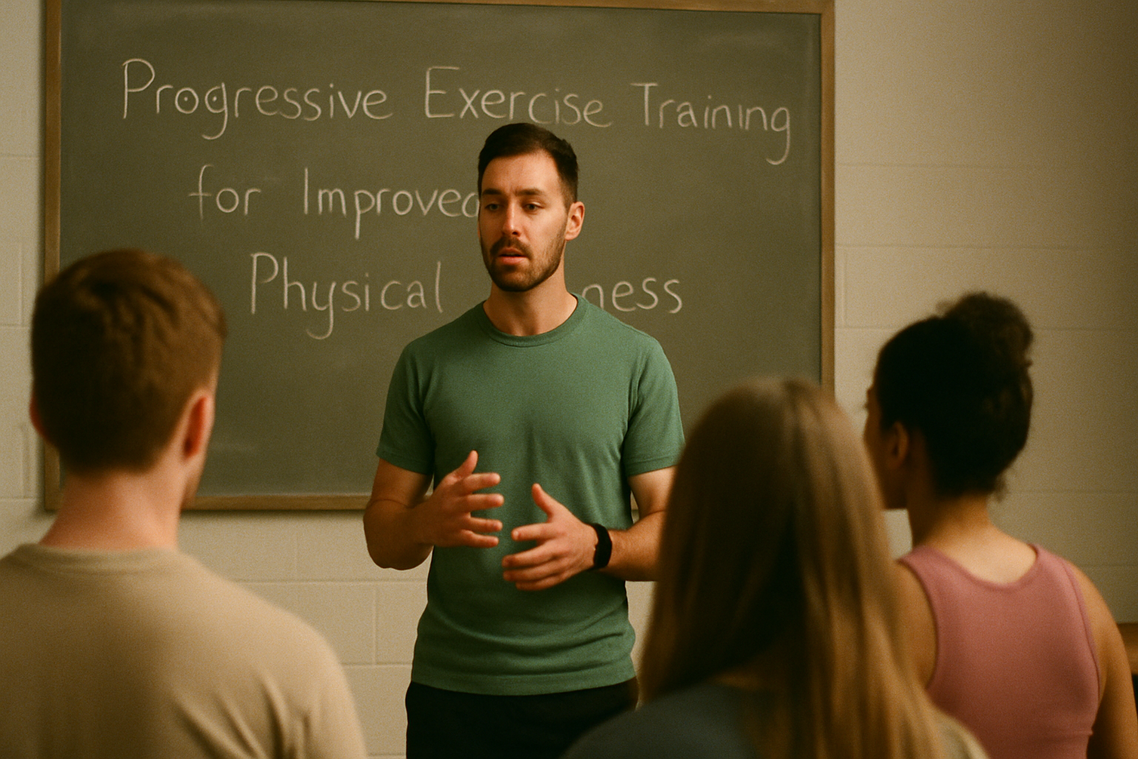
If you’ve ever felt stuck doing the same workouts and seeing zero progress, you’re not alone. It’s frustrating to show up, sweat hard, and still feel like your body didn’t get the memo. The missing piece is usually progressive overload—the primary driver of physical adaptation. In simple terms, progressive overload means gradually increasing the demand placed on your body so it has no choice but to adapt.
Most people think that just means lifting heavier weights. Not quite.
There are four key variables you can manipulate:
- Intensity (weight): Add 5 pounds to your squat or move from dumbbells to a barbell.
- Volume (sets x reps): Add one extra set or increase from 8 to 10 reps per set.
- Frequency (sessions per week): Turn a four-day split into five training days.
- Density (less rest): Reduce rest periods by 15 seconds while maintaining performance.
Here’s the part that annoys seasoned lifters: doing the same 3×10 routine for months and wondering why nothing changes (your body adapts fast). Small, strategic changes beat random “muscle confusion” every time.
Some argue constant progression risks burnout or injury. That’s true—if you increase everything at once. That’s why periodization matters. Periodization structures training into blocks, like a high-volume phase followed by a high-intensity phase, to prevent accommodation and overtraining.
Think of it like seasons in a Netflix series—each block builds on the last instead of repeating the same episode.
When progress stalls, revisit your training momentum habits and reassess which variable needs adjusting. If you’re navigating setbacks, revisit how to regain momentum after a performance slump and apply overload with intention, not ego.
Principle 2: Engineering Recovery for Unstoppable Consistency
Most athletes treat recovery as doing nothing. That’s Mistake A. The smarter approach? Engineering recovery as part of the program itself. That’s Option B.
Training breaks the body down. Recovery builds it back stronger. This process—called supercompensation (when performance rebounds above baseline after adequate rest)—only happens if you reduce stress at the right time.
The Why and When of a Deload Week
A deload week strategically lowers volume and intensity to prevent overuse injuries and central nervous system fatigue. Think: 40–60% of normal load.
- Prevents chronic inflammation
- Restores hormone balance (testosterone and cortisol regulation)
- Preserves long-term performance consistency
Skip it, and you risk burnout. Schedule it every 4–8 weeks, depending on intensity. (Even superheroes retreat to the Batcave.)
Active Recovery: A vs B
A: Couch recovery — minimal circulation, stiffness, sluggish return.
B: Active recovery — enhanced blood flow, faster tissue repair.
Effective options include:
- Low-intensity cardio (Zone 1–2 effort)
- Mobility work for joint range
- Foam rolling to reduce muscle tightness
Sleep is non-negotiable. During deep sleep, growth hormone peaks, muscle repair accelerates, and the brain resets neural drive (Walker, 2017). Without it, no amount of training momentum habits will save performance.
Pro tip: Protect sleep like a workout appointment.
Fueling performance isn’t about eating less; it’s about eating enough to support the work you ask your body to do. When calories match training demands, recovery improves, strength climbs, and consistency becomes realistic. When they don’t, progress stalls (and no amount of willpower fixes that).
Think of calories as energy currency. If you lift, sprint, or log miles, you must pay for that effort. Eating only for aesthetics confuses the goal. Performance nutrition prioritizes output first; body composition often follows.
Macronutrients are the three primary nutrients that provide energy:
- Protein supports muscle protein synthesis, the process of repairing and building muscle tissue after training.
- Carbohydrates replenish glycogen, the stored form of glucose your muscles rely on during intense work.
- Fats aid hormone production, including testosterone and estrogen, which influence recovery and adaptation.
Nutrient timing simply means when you eat these nutrients. Consuming protein and carbohydrates within a few hours before or after training enhances recovery and replenishment. Think of it like refueling a car immediately after a long drive.
Align this approach with training momentum habits and you create a cycle: train, fuel, recover, repeat. Pro tip: if performance drops, check intake before blaming your program.
Build Your Sustainable System
Audit, Overload, Recover, and Fuel are not isolated tactics — they function as one integrated system. When each piece supports the others, progress stops feeling random and starts becoming predictable. Consistency isn’t about grinding harder or relying on motivation. It’s the natural outcome of a well-designed plan that respects stress, adaptation, and recovery.
This is where real growth happens. You’re no longer just working out — you’re training with purpose and building training momentum habits that compound over time.
Now take action: choose one principle — Audit, Overload, Recover, or Fuel — and intentionally apply it to your next training week. Start there, and build forward.
 Senior Fitness & Nutrition Analyst
Theresan Keatonivas writes the kind of athletic endurance training techniques content that people actually send to each other. Not because it's flashy or controversial, but because it's the sort of thing where you read it and immediately think of three people who need to see it. Theresan has a talent for identifying the questions that a lot of people have but haven't quite figured out how to articulate yet — and then answering them properly.
They covers a lot of ground: Athletic Endurance Training Techniques, Workout Recovery Hacks, Athletic Health Fundamentals, and plenty of adjacent territory that doesn't always get treated with the same seriousness. The consistency across all of it is a certain kind of respect for the reader. Theresan doesn't assume people are stupid, and they doesn't assume they know everything either. They writes for someone who is genuinely trying to figure something out — because that's usually who's actually reading. That assumption shapes everything from how they structures an explanation to how much background they includes before getting to the point.
Beyond the practical stuff, there's something in Theresan's writing that reflects a real investment in the subject — not performed enthusiasm, but the kind of sustained interest that produces insight over time. They has been paying attention to athletic endurance training techniques long enough that they notices things a more casual observer would miss. That depth shows up in the work in ways that are hard to fake.
Senior Fitness & Nutrition Analyst
Theresan Keatonivas writes the kind of athletic endurance training techniques content that people actually send to each other. Not because it's flashy or controversial, but because it's the sort of thing where you read it and immediately think of three people who need to see it. Theresan has a talent for identifying the questions that a lot of people have but haven't quite figured out how to articulate yet — and then answering them properly.
They covers a lot of ground: Athletic Endurance Training Techniques, Workout Recovery Hacks, Athletic Health Fundamentals, and plenty of adjacent territory that doesn't always get treated with the same seriousness. The consistency across all of it is a certain kind of respect for the reader. Theresan doesn't assume people are stupid, and they doesn't assume they know everything either. They writes for someone who is genuinely trying to figure something out — because that's usually who's actually reading. That assumption shapes everything from how they structures an explanation to how much background they includes before getting to the point.
Beyond the practical stuff, there's something in Theresan's writing that reflects a real investment in the subject — not performed enthusiasm, but the kind of sustained interest that produces insight over time. They has been paying attention to athletic endurance training techniques long enough that they notices things a more casual observer would miss. That depth shows up in the work in ways that are hard to fake.